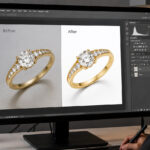
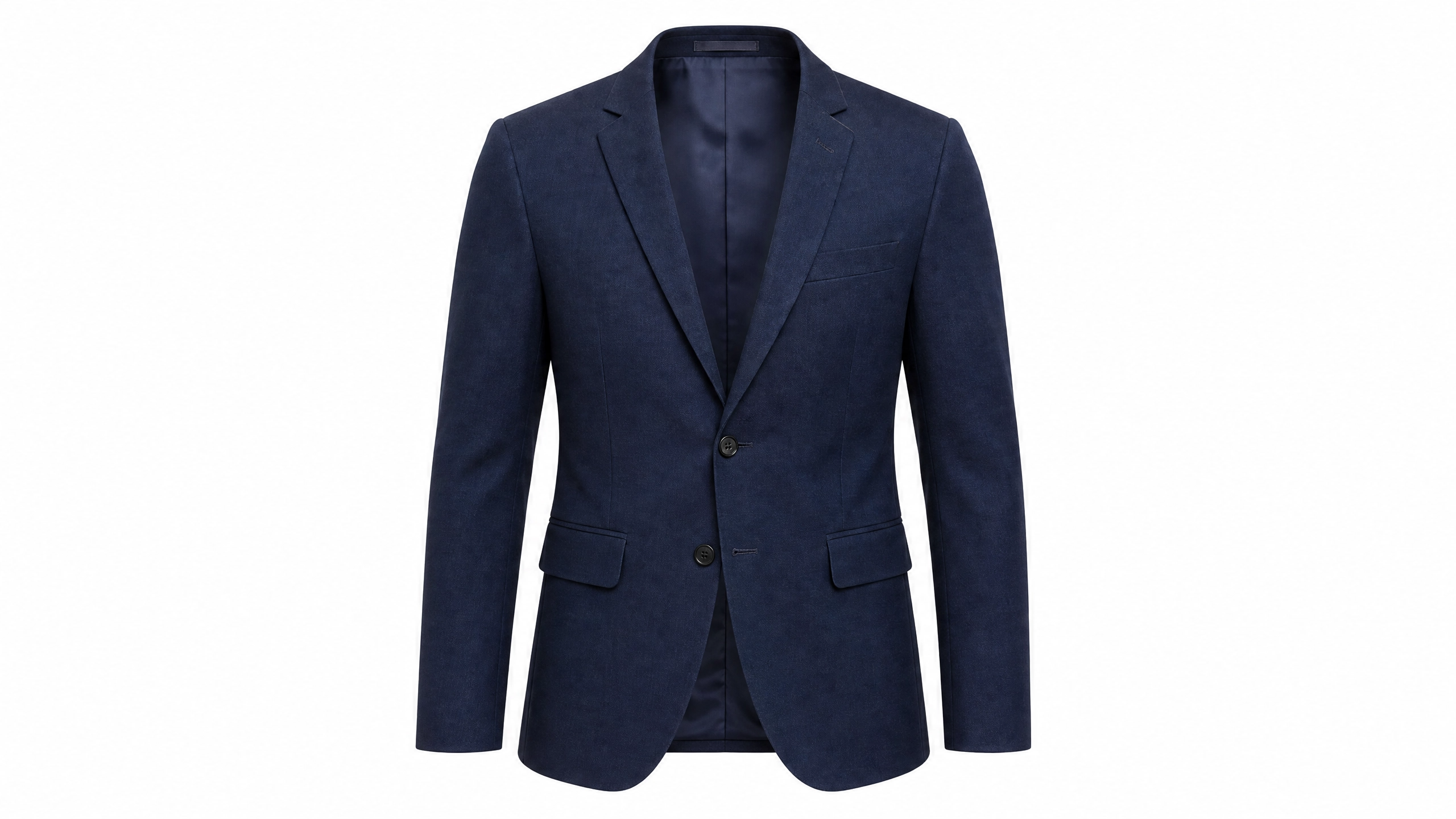
If you sell clothing online, you have already noticed the problem: garments shot flat on a table look lifeless, while hiring live models for every SKU is ruinously expensive. Ghost mannequin editing — sometimes called the invisible mannequin effect or hollow man effect — solves this by photographing your garment on a real mannequin, then digitally removing the mannequin in post-production so the clothing appears to float in a natural, 3-D human shape.
The result looks like a professional model is wearing your jacket, shirt, or dress — without any model fees, scheduling headaches, or usage rights to negotiate. For high-volume fashion sellers on Amazon, ASOS, Zalando, or their own Shopify store, ghost mannequin services are the single highest-ROI photo editing investment available. Explore our dedicated ghost mannequin service page to see examples and request a free trial. If you are new to the concept, our in-depth post on invisible mannequin service for product photography is also a great starting point.
Why every fashion e-commerce brand needs this service
Conversion rate data from leading apparel retailers consistently shows that hollow man product images outperform flat-lay photos by 30–58% in click-through and add-to-cart rates. Customers need to visualise fit and form before they buy; a floating, shaped garment communicates both far more effectively than a folded item on a white background.
Beyond conversion rates, ghost mannequin editing also:
- Maintains visual consistency across an entire product catalogue
- Reduces return rates by setting accurate fit expectations
- Meets the strict image requirements of major marketplaces (Amazon A+ content, eBay catalogue, ASOS supplier portal)
- Saves 60–80% compared to live model photography at equivalent volume
For a full breakdown of every advantage, see our guide to the benefits of ghost mannequin photography services for e-commerce.
Types of ghost mannequin services
Neck joint / collar service
Reconstructs the inside neck, collar, and chest area — the most common request for t-shirts, shirts, and knitwear. The retoucher composites an interior shot of the neckline over the primary mannequin image, creating a seamless, hollow collar that looks natural on any product page.
Bottom joint service
Reveals the inside hem and lining of jackets, coats, and dresses — critical for showing garment construction quality and interior finish to discerning buyers.
Sleeve joint service
Reconstructs the armhole and sleeve interior, especially useful for outerwear and structured tailoring where the interior construction is part of the product’s value proposition.
Multi-part invisible mannequin editing
Full invisible mannequin editing combines neck, bottom, and sleeve joints — typically merging 3–4 source images per garment into a single polished product photo. This is the gold standard for premium fashion brands and marketplaces with strict image requirements. Our ghost mannequin service covers all these joint types with 24-hour turnaround.
How the ghost mannequin editing process works
Step 1 — shoot your garment correctly
For the best ghost mannequin result, you need at least two photographs per garment: one of the garment on the mannequin (front and back), and a second of the internal label or lining area that will be exposed once the mannequin is removed. Consistent lighting, a neutral grey or white backdrop, and a camera angle at mannequin chest-height are standard requirements.
Step 2 — background removal and clipping path
The editing team creates a precise clipping path around the garment using Photoshop’s pen tool, separating the clothing from its background. High-end providers use hand-drawn paths rather than automated selection, which preserves fine details like lace, sheer fabrics, and intricate embroidery. Learn more in our guide to photo clipping path and clipping path services.
Step 3 — mannequin removal and joint reconstruction
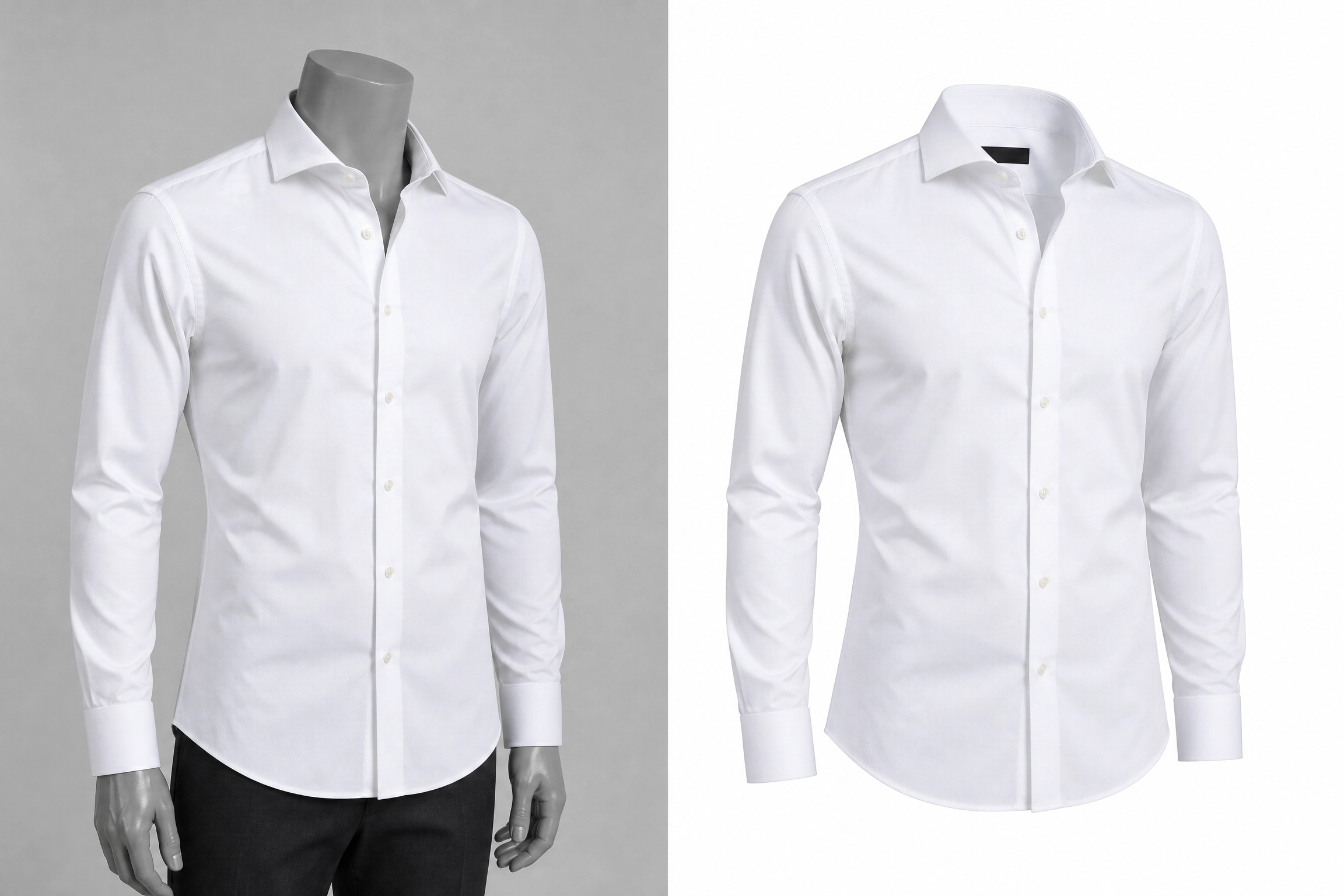
The mannequin body parts are masked out layer by layer. The inside of the neckline, armholes, and hem are reconstructed by compositing the interior photograph into the primary image, creating a seamless hollow interior that mimics how the garment looks when worn.
Step 4 — retouching and colour correction
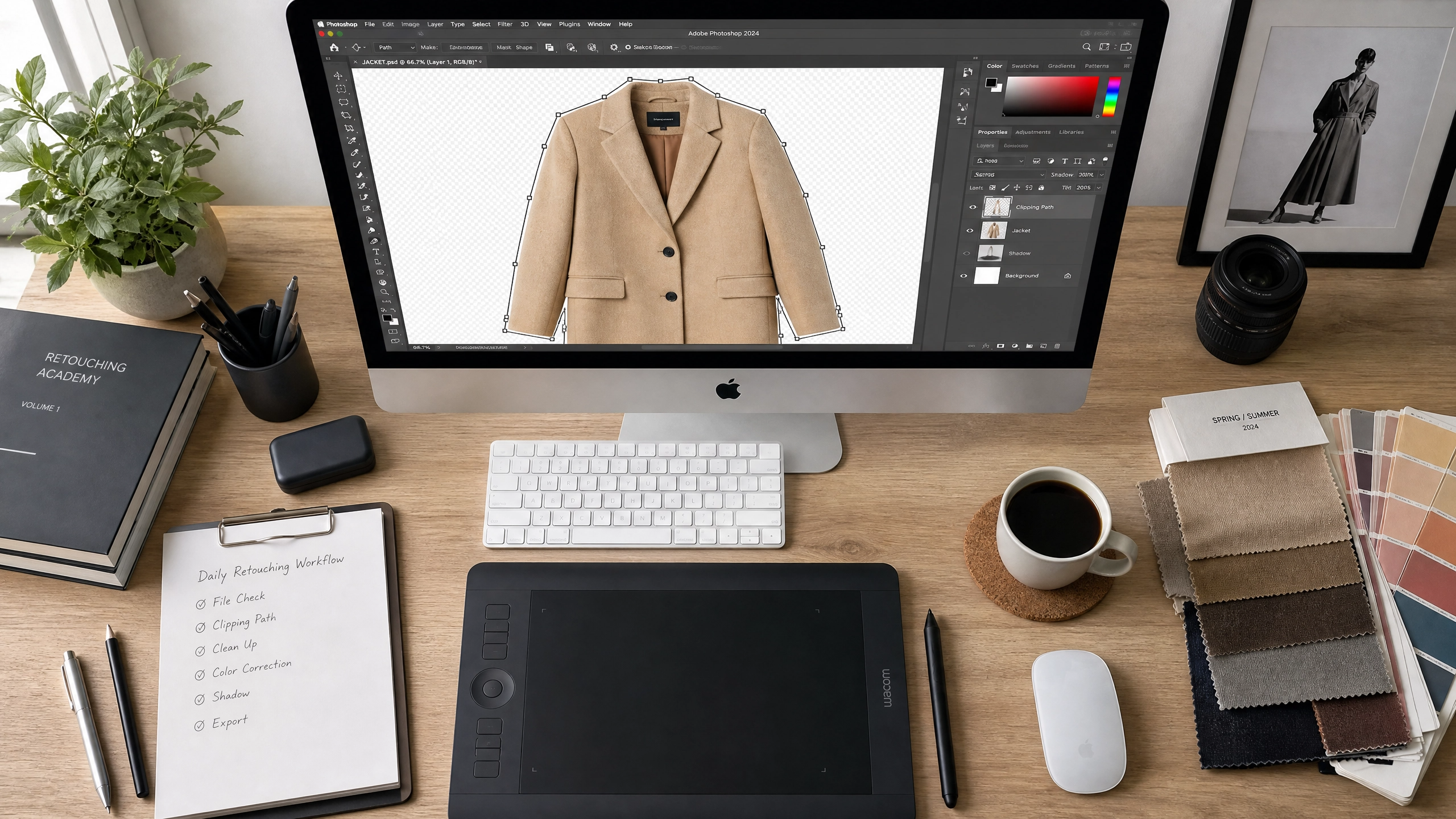
Any wrinkles, lint, or unintended folds are removed. Colour grading ensures the garment matches the actual product and stays consistent across your catalogue. Final images are exported in your required format — typically JPEG at 72 dpi for web or TIFF at 300 dpi for print. For large-scale catalogue work, our professional image post production services handle the full pipeline end-to-end.
Choosing a ghost mannequin service provider: 7 questions to ask
- Do they use hand-drawn clipping paths? Automated selections fail on delicate fabrics and loose threads.
- What is the turnaround time per image? Industry standard is 24 hours for standard orders; 6–12 hours for rush.
- Can they handle your volume? Seasonal fashion brands may need 500–2,000 images processed in under a week.
- Do they offer a free trial? Reputable services edit 3–5 sample images at no cost so you can evaluate quality before committing.
- What file formats and colour profiles do they deliver? sRGB for web, Adobe RGB for print.
- Is revision included? One free revision round is the minimum acceptable standard.
- How is data security handled? Look for GDPR-compliant file transfer and deletion policies.
Ghost mannequin pricing: what to expect in 2026
Pricing varies significantly by complexity and provider region. As a benchmark, expect:
- Basic neck joint: $0.80 – $2.50 per image
- Full invisible mannequin (multi-part): $3.00 – $8.00 per image
- Rush 6-hour turnaround: 30–50% premium over standard rates
- Volume discounts typically kick in at 100+ images per batch
Bangladesh-based photo editing studios offer the most competitive pricing without sacrificing quality, making them the preferred choice for UK, US, and EU fashion brands managing tight margins.
Top use cases by garment type
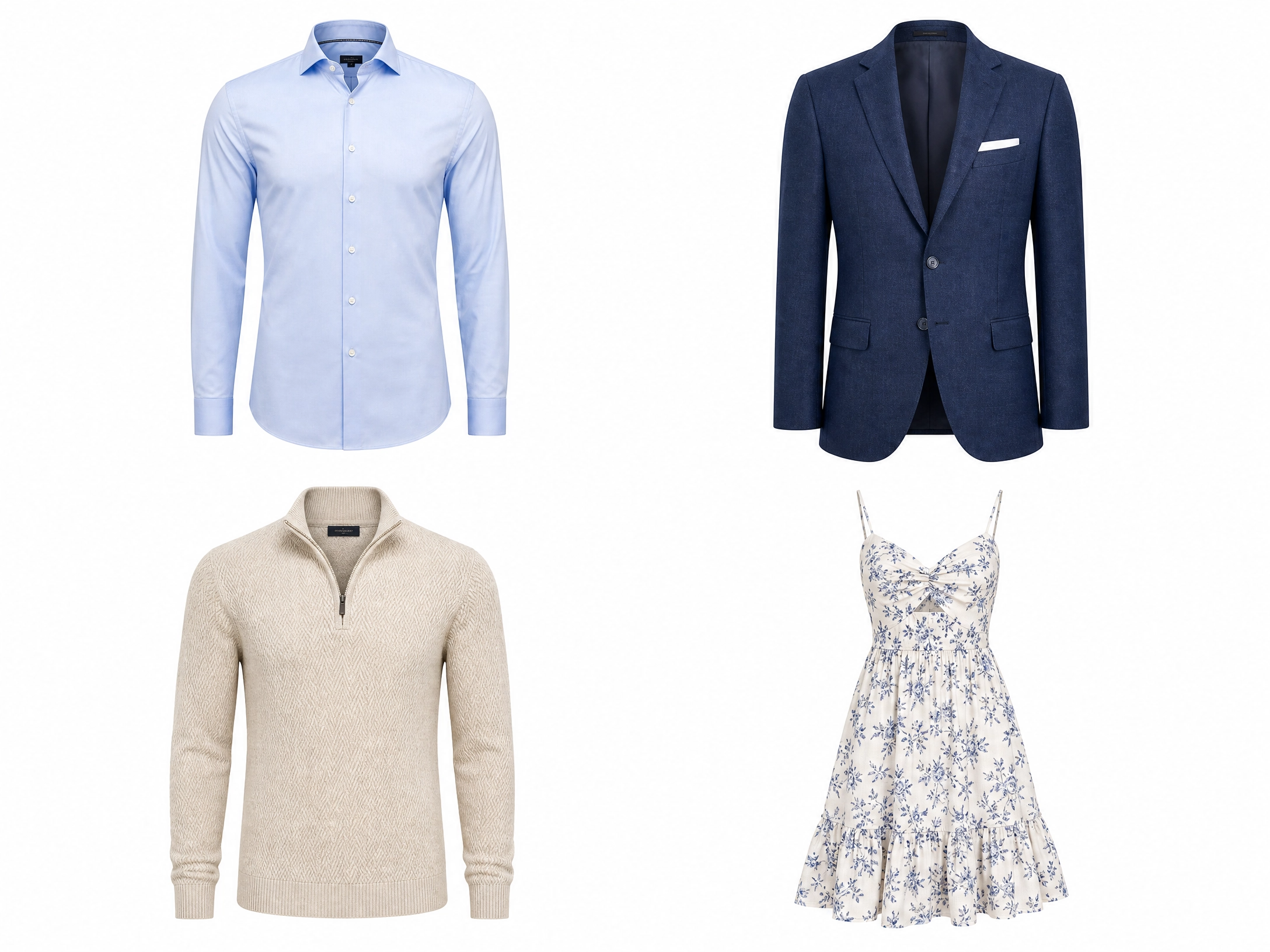
Ghost mannequin editing is particularly effective for: dress shirts and formal shirts (neck joint critical), blazers and structured jackets (sleeve and bottom joint), knitwear and hoodies (shape retention without a model), dresses (full-body hollow man effect), and lingerie and swimwear (where model photography is especially cost-intensive). Browse our ghost mannequin service page to see real edited examples across all these garment categories.
Frequently asked questions
What is ghost mannequin service in photography?
Ghost mannequin service is a photo retouching technique where a mannequin is digitally removed from clothing photographs in post-production. The result is a garment that appears to float in a natural, 3-D human shape without any visible mannequin or model — widely used by fashion e-commerce brands to produce professional, cost-effective product images.
How much does ghost mannequin photo editing cost?
Ghost mannequin editing typically costs $0.80 – $2.50 per image for a basic neck joint service, and $3.00 – $8.00 per image for a full multi-part invisible mannequin treatment. Volume discounts apply at 100+ images per batch, and rush 6-hour turnaround adds a 30–50% premium over standard 24-hour rates.
How many photos do I need for ghost mannequin editing?
You need at least two photographs per garment: one of the garment worn on the mannequin (front and back), and one of the interior — showing the lining, label, or inside of the neckline. Some complex garments such as coats or structured jackets may require 3–4 source images for a full multi-part invisible mannequin edit.
What turnaround time should I expect?
The industry standard turnaround for ghost mannequin editing is 24 hours for standard orders. Rush services with 6–12 hour delivery are available at most professional providers for an additional fee. High-volume batches of 500–2,000 images typically take 2–5 business days depending on the provider’s team capacity.
Is ghost mannequin editing done manually or by AI?
Professional ghost mannequin editing is primarily done manually by skilled retouchers using Adobe Photoshop, with hand-drawn clipping paths to ensure precision on delicate fabrics like lace, sheer textiles, and embroidery. While AI-assisted tools can handle simple backgrounds, the neck joint reconstruction and interior compositing steps still require expert human editing to achieve marketplace-quality results.
What is the difference between ghost mannequin and flat lay photography?
Flat lay photography shows garments laid flat on a surface, which can look two-dimensional and uninspiring. Ghost mannequin editing produces a 3-D floating effect that shows how the garment fits and drapes on a body. Conversion rate studies consistently show ghost mannequin images outperform flat-lay images by 30–58% for fashion e-commerce products.
Ready to transform your product photography?
Professional ghost mannequin services can reduce your photo production costs by up to 70% while simultaneously increasing the visual quality of your product listings. Whether you need 10 images edited or 10,000, partnering with a specialist provider is the most scalable approach to building a consistent, conversion-optimised catalogue.
Request a free trial edit today — visit our ghost mannequin service page and send your first 3 garment images. Most orders are returned within 24 hours, giving you a risk-free way to evaluate quality before committing to a full batch.