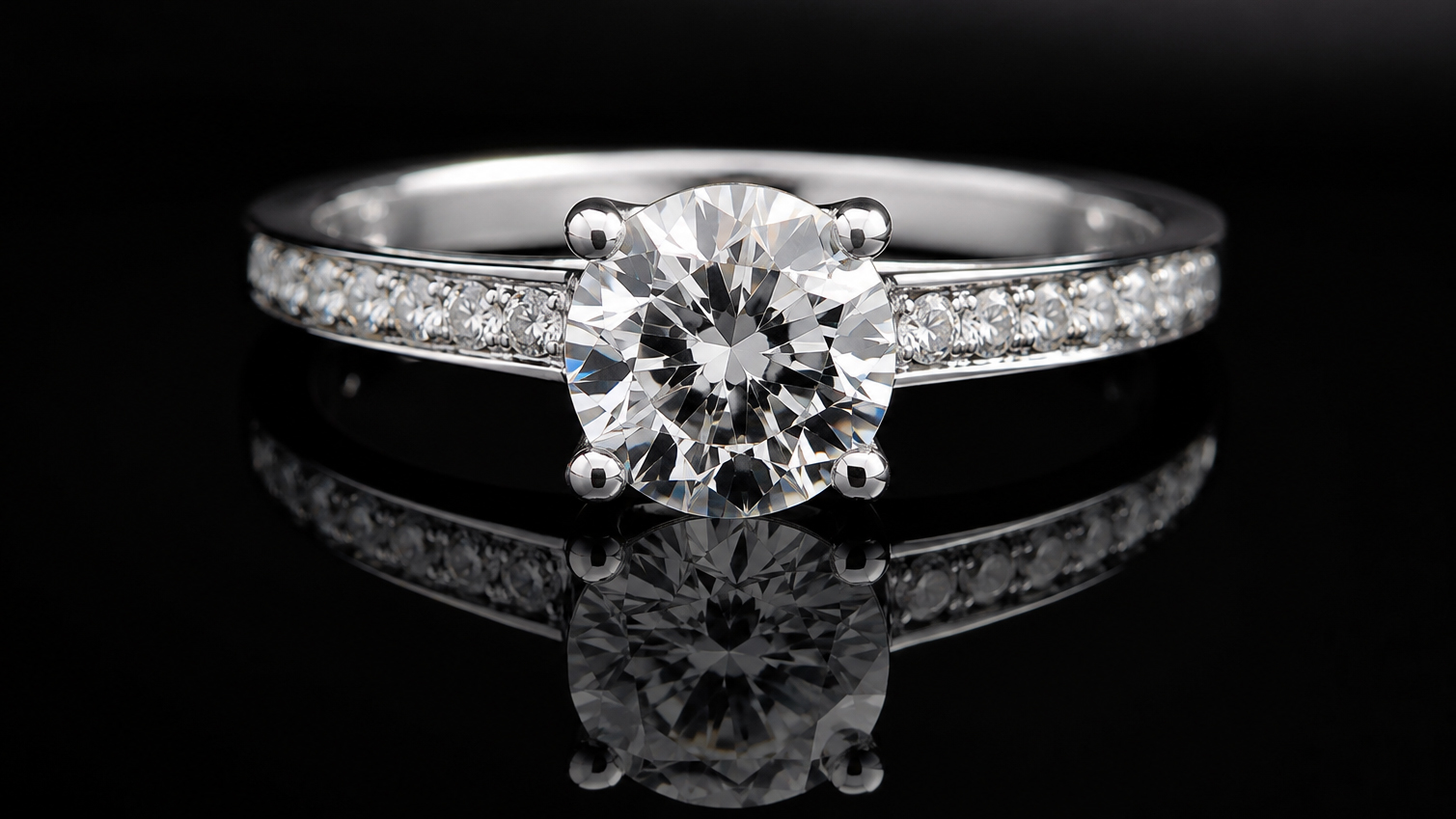
Online shoppers can’t hold a ring, tilt a pendant under the light, or feel the weight of a bracelet before they buy. All they have is the image on the screen. That image is the product, as far as their brain is concerned — and if what arrives in the box doesn’t match what they saw online, the relationship with your brand is damaged before it even really begins.
This is the core tension behind a growing question in jewelry e-commerce: why don’t you create a picture of jewelry with AI? When you weigh AI jewelry photography vs. real product photography, the AI version is fast and cheap — but when a customer can’t match the virtual image with the real product in their hands, they don’t give your brand the benefit of the doubt. They simply move on, return the item, or leave a review that costs you the next ten customers.
This article breaks down why AI-generated jewelry images create risk for online sellers, how that risk shows up in returns and reviews, and why realistic jewelry photography combined with professional retouching remains the safer foundation for e-commerce.
Why Jewelry Images Matter So Much in Online Shopping
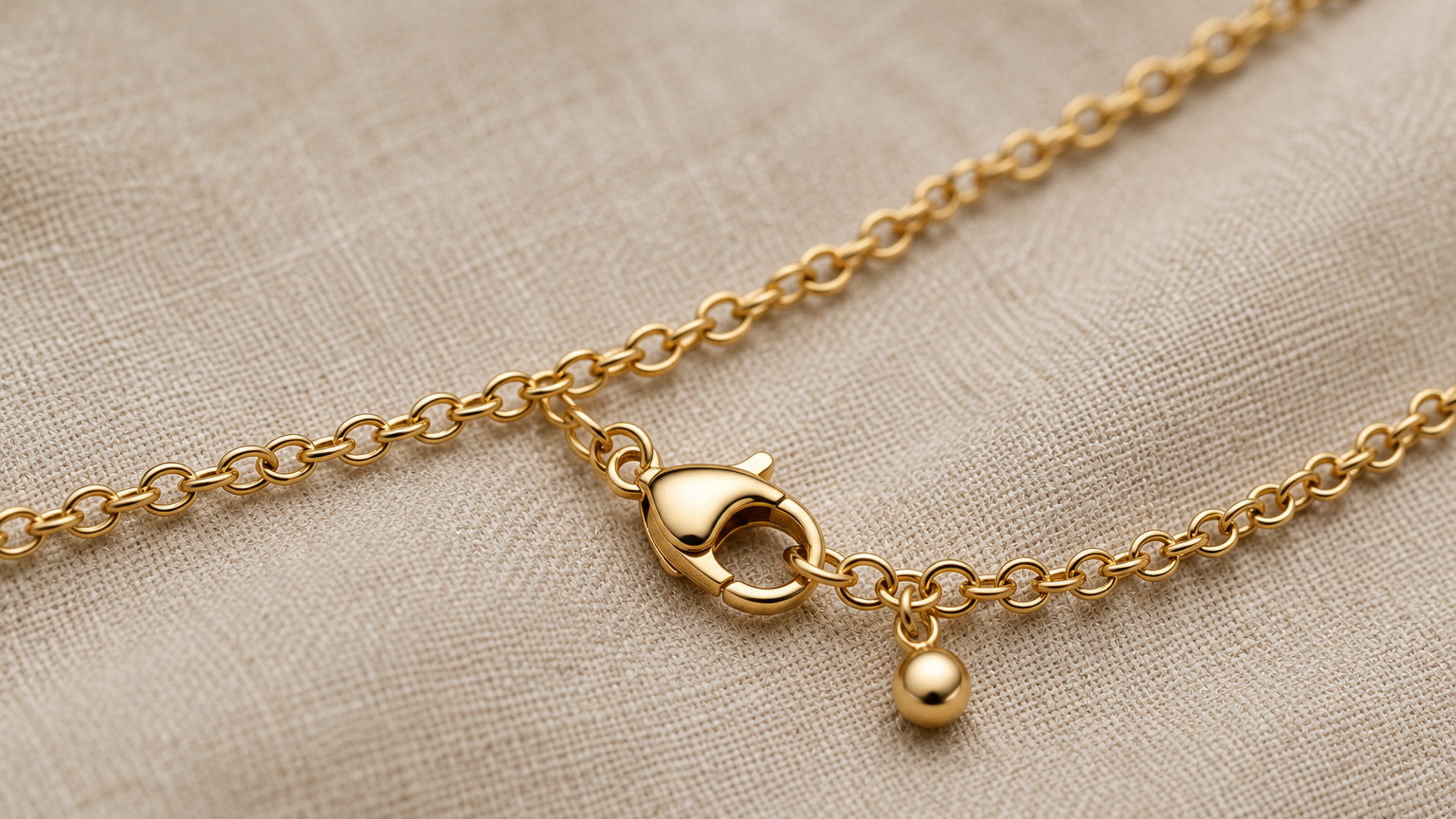
Jewelry is a category where accuracy matters more than almost any other product type. Shoppers are evaluating:
- Design and silhouette
- Metal color and finish (yellow gold vs. rose gold vs. white gold, matte vs. polished)
- Gemstone color, clarity, and cut
- Proportions and scale relative to a finger, wrist, or neckline
- Fine details like prong settings, engraving, or filigree
- Overall craftsmanship and quality
Because none of this can be touched or tried on, the photo is doing all the persuading. Shopify’s own guidance on product photography notes that customers rely on images to judge exactly these details, and that photos which don’t clearly show size, color, and material lead directly to mismatched expectations and returns. For jewelry specifically, where a millimeter of stone size or a shade of gold can change how a piece looks on the body, that margin for error is even smaller.
The Problem With AI-Generated Jewelry Product Images
AI image generators are genuinely impressive at producing polished, eye-catching visuals. The issue isn’t that they look bad — it’s that they often don’t look true. Common problems include:
- Incorrect gemstone details — stone shape, facet pattern, or color that doesn’t match the real gem
- Unrealistic metal textures — surfaces that look too smooth, too reflective, or plastic-like
- Altered proportions — a pendant that appears larger or a band that looks thicker than it actually is
- Fake or inconsistent reflections — lighting that wouldn’t behave this way on real metal or a real cut stone
- Incorrect stone placement or setting style
- Missing design details — engraving, milgrain, or filigree that the AI simply didn’t render
- Unrealistic or shifted colors — a warmer or cooler tone than the actual piece
- Artificial-looking surfaces that read as “generated” once you look closely
None of these flaws are dealbreakers for a mood board or a marketing concept. They become a serious problem the moment that image is the thing a customer clicks “Buy” on.
When Virtual Jewelry Doesn’t Match the Real Product
Here’s what happens on the customer’s end when the box arrives and the ring, necklace, or earrings don’t quite match the photo they fell in love with:
- Loss of trust — the first, most immediate reaction. If the image was wrong, what else was exaggerated?
- Disappointment — even a small gap between expectation and reality feels bigger for jewelry, because it’s often an emotional or sentimental purchase.
- Negative reviews — publicly documenting the mismatch, which future shoppers will read before every other page on your site.
- Product returns — industry data cited by multiple e-commerce photography guides puts “looked different than the photo” among the top reasons for online product returns, and jewelry is especially vulnerable to this because color and scale are so easy to misjudge from an image.
- Lower repeat purchases — a customer who feels misled once rarely gives a second chance.
- Damage to brand reputation — in a category built on trust and perceived value, a reputation for inaccurate images is hard to shake off.
For a small Etsy jewelry shop or a growing Shopify brand, a handful of “not as pictured” reviews can outweigh months of good marketing.
AI Jewelry Photography vs. Real Product Photography
When you put AI jewelry photography vs. real photography side by side, the differences show up fast:
| Factor | AI-Generated Images | Real Product Photography |
|---|---|---|
| Accuracy to the actual item | Approximate, sometimes invented details | Exact — it’s the real product |
| Product detail fidelity | Can miss or distort fine details | Captures true craftsmanship |
| Color representation | Prone to shifts and inconsistency | Can be color-calibrated to match reality |
| Texture and surface realism | Often looks synthetic on close inspection | Naturally realistic |
| Customer expectations | Risk of overpromising | Sets accurate expectations |
| Brand credibility | Can raise questions once discovered | Reinforces honesty and quality |
AI can win on speed and cost. Real photography wins on the one thing that matters most for a purchase decision: whether the picture is actually true.
Why Realistic Jewelry Photography Builds Customer Trust
When a customer can look at your product photo and know, with confidence, that this is exactly what will arrive, something important happens — the purchase decision gets easier. There’s less hesitation, less second-guessing, and less need to “just check reviews one more time” before checkout.
Realistic photography also does something AI can’t fully replicate yet: it captures the specific piece. Two rings from the same collection can catch light differently depending on the exact cut of the stone or the polish of that particular batch of metal. Real photos of the real inventory remove that ambiguity entirely.
How Professional Jewelry Retouching Improves Real Product Images
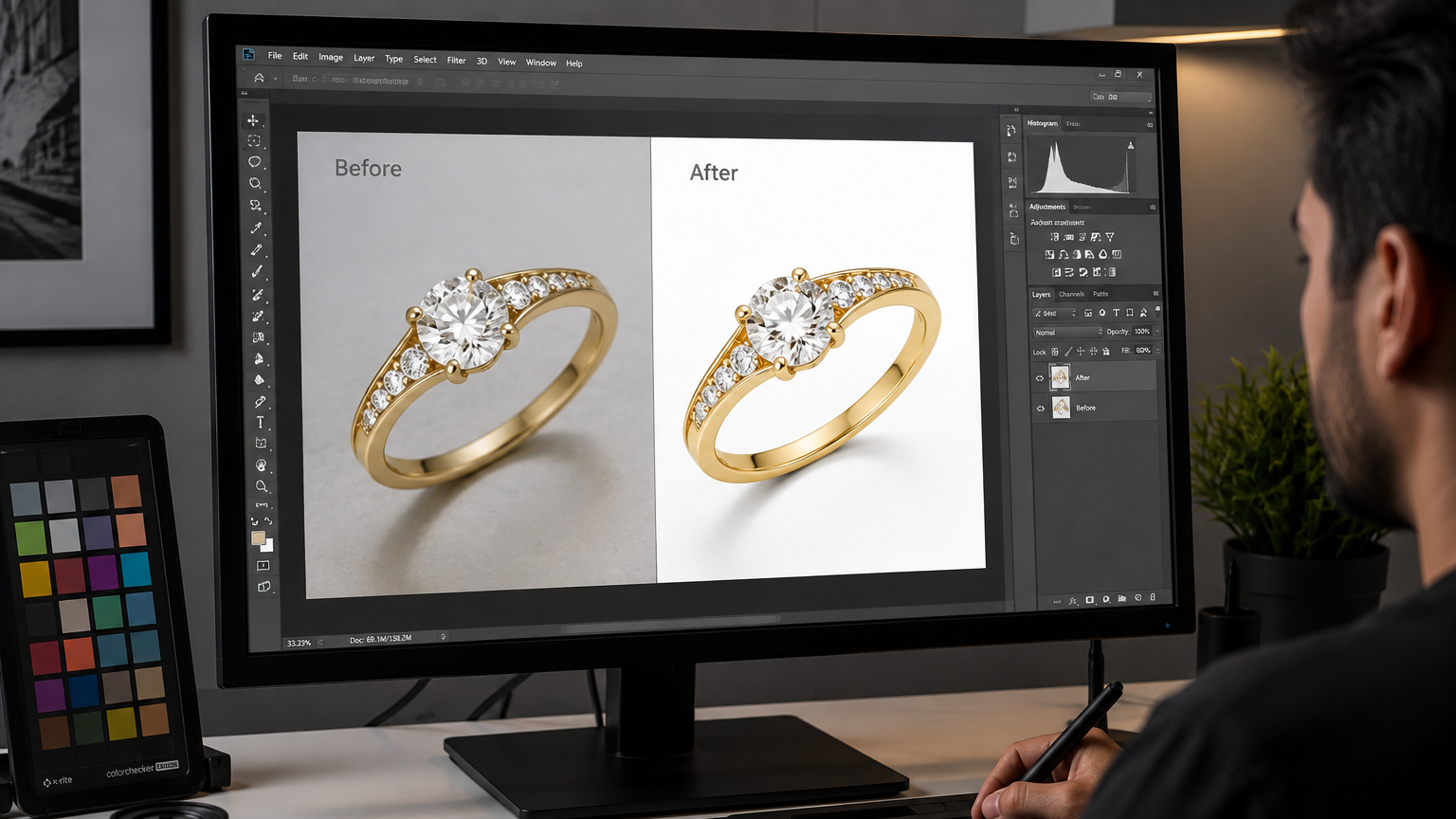
The answer to “AI vs. real photography” isn’t unedited, raw photos either. It’s real photography enhanced by skilled retouching — polishing the presentation without changing what the product actually is. A professional jewelry retouching service typically handles:
- Dust and micro-scratch removal
- Color correction to match the true metal and gemstone tones
- Exposure and white balance adjustment
- Highlight and shadow control so the piece reads clearly, not blown out or too dark
- Gemstone enhancement (clarity and sparkle, without inventing facets that aren’t there)
- Metal polishing and clean, consistent reflections
- Reflection and background cleanup
- Background removal for a clean, marketplace-ready look
- Fine detail enhancement so engraving, prongs, and settings are crisp
This is the difference between a photo that’s simply “unedited” and one that’s genuinely retouched. The product doesn’t change — the presentation of it becomes as strong as possible. If you’re weighing your options here, a professional photo editing service can usually take a decent raw shot and turn it into something that looks premium, while keeping every proportion and detail accurate to the real piece.
Can AI Still Be Useful for Jewelry Businesses?
AI image tools aren’t the enemy here — the issue is where they’re used, not whether they should be used at all. AI can be genuinely useful for:
- Creative background concepts and mood inspiration
- Marketing visuals that clearly aren’t meant to be literal product shots
- Mood boards for a new collection or campaign direction
- Campaign ideas and social content that supports the brand story
- Visual experimentation before a real shoot
The dividing line is simple: the moment an image is used to represent the actual product a customer will receive, it needs to be accurate. Marketing and mood content can take creative liberties. Product listing photos cannot.
Best Practices for Creating Trustworthy Jewelry Product Images
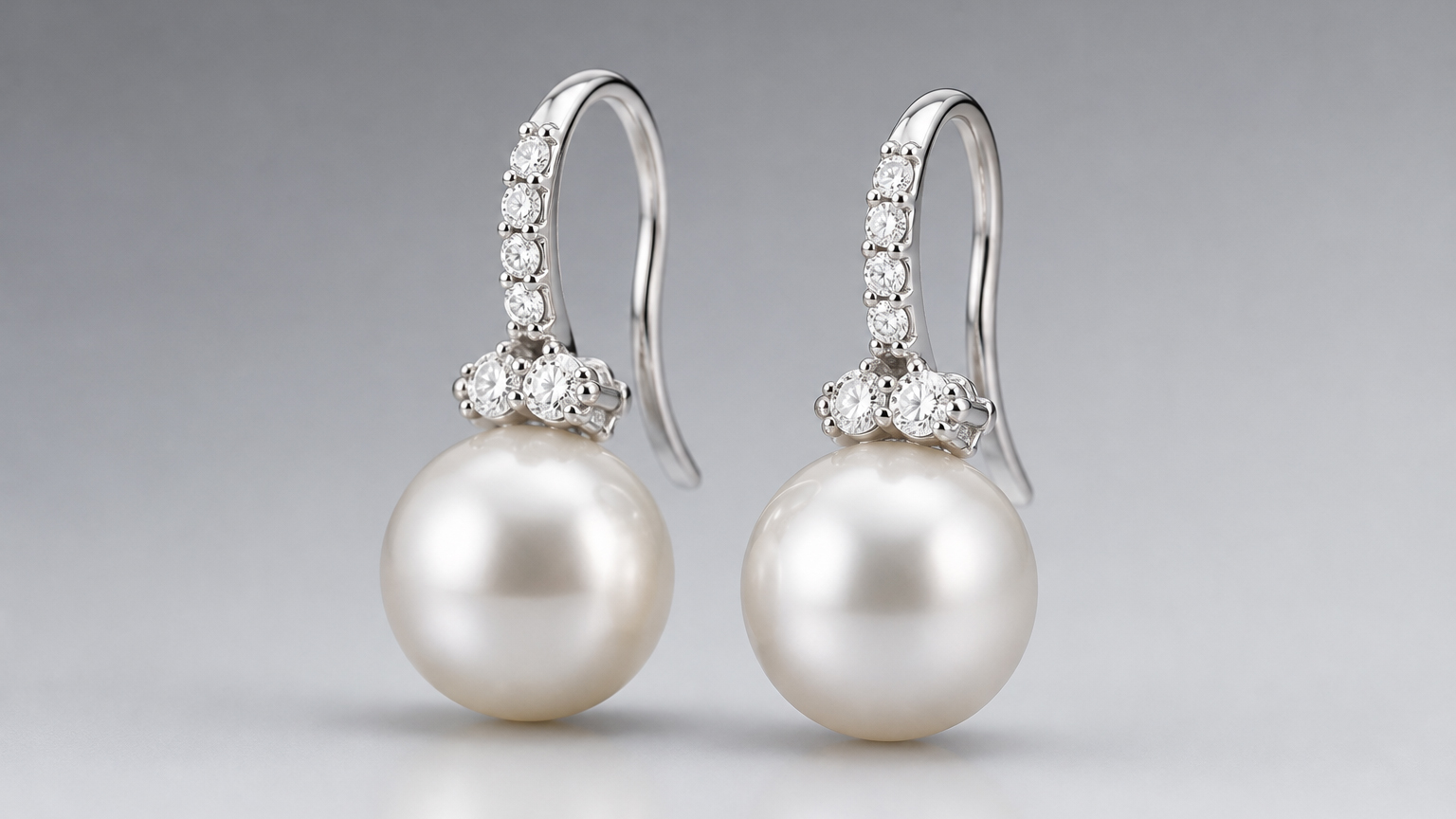
- Photograph the actual jewelry you sell — not a stock image, not a rendering.
- Use professional, consistent lighting for every shot.
- Maintain accurate, color-calibrated tones for metal and gemstones.
- Preserve the real proportions and scale of the piece.
- Use professional retouching to clean up and polish — not to alter the product.
- Show multiple angles so customers can judge the piece from every side.
- Include close-up detail shots of settings, clasps, and engraving.
- Avoid AI-generated alterations that misrepresent design or materials.
- Keep a consistent photography style across your entire catalog.
- Compare the final edited image against the physical product before publishing — every time.
AI Jewelry Images Can Attract Attention — But Accuracy Creates Sales
There’s a meaningful difference between a photo that stops someone’s scroll and a photo that convinces them to buy. AI-generated visuals can be striking, and striking visuals get clicks. But attention without accuracy tends to convert into hesitation at checkout, or worse, a return after the sale. Baymard Institute’s ongoing product-page research has consistently found that shoppers lean heavily on images to fill the gap left by not being able to touch a product, and that pages lacking clear, representative visuals lose sales that better photography would have kept. Accuracy is what turns a scroll-stopping image into a completed, low-regret purchase — which is really the whole case for choosing real photography when you compare AI jewelry photography vs. real options for your listings.
Google’s own guidance for image SEO also rewards genuine, high-quality, representative images over generic or misleading ones — another reason real product photography tends to outperform AI-generated visuals for jewelry listings in the long run, both with customers and in search visibility.
Final Thoughts
AI-generated imagery has a place in jewelry marketing — for concepts, moods, and campaigns where creative interpretation is expected. But for the images that actually sell a specific piece of jewelry, accuracy has to come first. When a customer can look at your listing photo and know exactly what will show up at their door, you’re not just avoiding a return — you’re building the kind of trust that turns a first-time buyer into a repeat customer. Real photography, supported by skilled retouching, remains the most reliable way to get there.