If you sell clothing online, you already know this: a blurry, awkward, or inconsistent product photo can quietly kill a sale before a shopper even reads your description. People buy with their eyes first. That’s especially true in fashion, where fit, drape, and texture make or break a purchase decision.
This is exactly why so many apparel brands — from one-person Etsy shops to major clothing manufacturers — rely on a Ghost Mannequin Service to make their product photos look clean, consistent, and professional. If you’ve ever looked at a shirt online and wondered how it seems to float perfectly with no mannequin, no hanger, and no visible support, you were looking at ghost mannequin editing in action.
In this guide, we’ll break down what a Ghost Mannequin Service actually is, how the process works behind the scenes, why it matters so much for eCommerce sales, and how to pick the right partner for your brand. We’ll also cover common mistakes, compare it to other photography styles, and answer the questions we hear most often from store owners and photographers.
Why High-Quality Apparel Images Matter So Much
Let’s start with the obvious but often underestimated point: online shoppers can’t touch, try on, or feel your clothing. All they have is the image on the screen.
A few things happen when your apparel photos aren’t up to par:
- Shoppers assume the product quality matches the photo quality — poorly.
- Return rates climb because buyers misjudge fit or color.
- Your listings look inconsistent next to competitors with clean, professional images.
- Trust drops, and trust is everything in online retail.
On the flip side, sharp, consistent, well-lit product images build instant credibility. They make your store look established even if you’re just getting started. This is where a Ghost Mannequin Service becomes less of a “nice to have” and more of a baseline requirement for any serious apparel brand.
What Is a Ghost Mannequin Service?
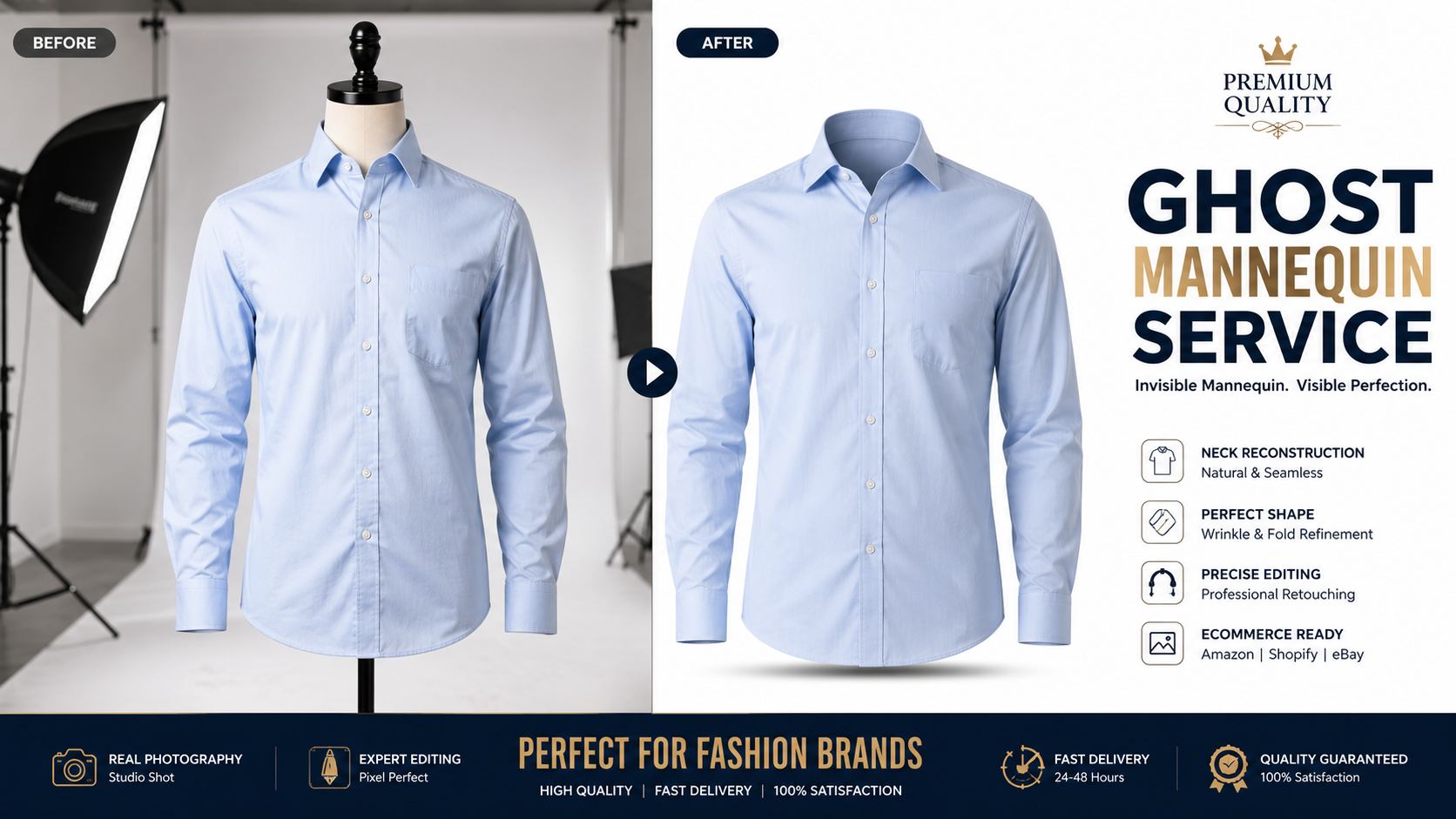
A Ghost Mannequin Service refers to the photo editing process used to remove a mannequin (or model) from a clothing photograph while keeping the garment’s natural 3D shape intact. The result looks like the item is being worn by an invisible person — hence the nickname “invisible mannequin” photography.
Here’s the trick: you can’t just erase the mannequin and be done with it. Doing that would leave a flat, lifeless image. Instead, editors reconstruct the parts of the garment that were hidden — like the neckline, collar, or inner sleeve areas — using multiple shots of the same item, then blend everything into one seamless photo.
This is sometimes called Invisible Mannequin Service or Ghost Mannequin Photo Editing, and the terms are used interchangeably across the industry. Whatever you call it, the goal is the same: a garment that looks full, dimensional, and ready to sell.
How Ghost Mannequin Editing Works
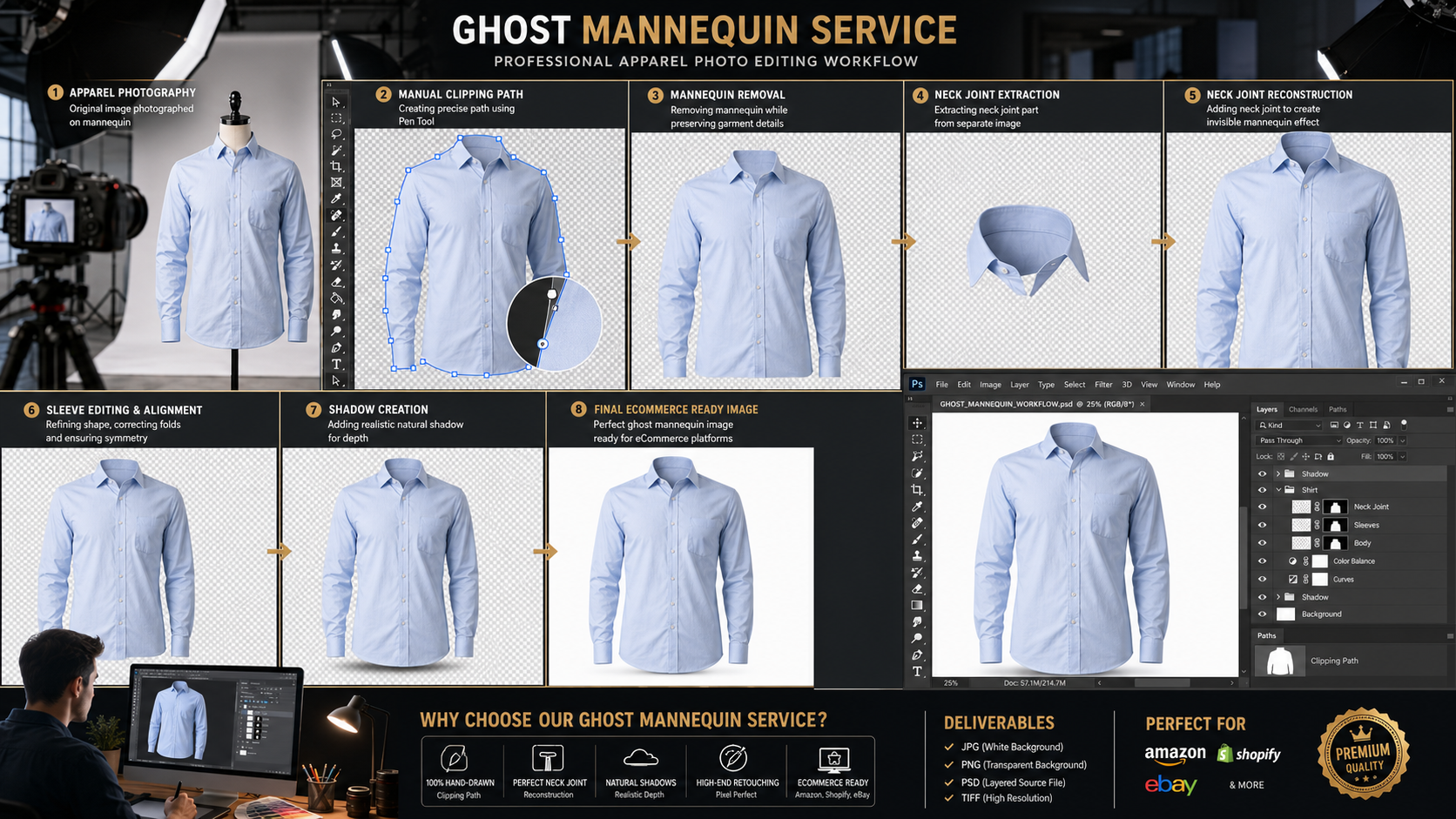
The process is more involved than most people expect. Here’s a simplified breakdown of the typical workflow:
- Photograph the garment on a mannequin. The item is dressed on a form and shot from the front, back, and sides under consistent studio lighting.
- Capture the hidden areas separately. The photographer removes the mannequin’s neck piece or takes an interior shot of the collar and inner neckline so the editor has reference material for reconstruction.
- Import into editing software. The images are brought into a program like Adobe Photoshop, where an editor works with layers to separate the garment from the mannequin.
- Remove the mannequin. Using precise clipping paths, the editor cuts away every trace of the mannequin form.
- Reconstruct the hidden sections. The neckline, collar interior, and any gaps left behind are rebuilt using the reference shots from step two.
- Add natural shadows and shading. This step is what separates amateur edits from professional ones — shadows need to look like they belong on a real body, not a flat cutout.
- Final color correction and background cleanup. The garment is placed on a pure white or transparent background, colors are matched to the physical product, and the image is exported in the required format.
This kind of Apparel Photo Editing takes a trained eye. Rushed reconstruction work is one of the easiest ways to end up with a product photo that looks “off” without shoppers being able to say exactly why.
Benefits for Fashion Brands
A well-executed Ghost Mannequin Service does more than make photos look nice. It directly affects your bottom line.
It creates consistency across your catalog. When every product photo follows the same format, shape, and lighting style, your entire store feels more professional and trustworthy.
It highlights the garment, not a person or a form. Shoppers can focus entirely on the cut, fit, and detail of the clothing itself.
It reduces return rates. Clear, accurate 3D representation helps customers understand sizing and shape before they buy, which cuts down on “it didn’t look like the picture” returns.
It saves on photography costs long term. Instead of hiring models for every single product, brands can shoot on a mannequin and let Clothing Image Editing do the heavy lifting.
It works beautifully across marketplaces. Amazon, Shopify, eBay, and other platforms all favor clean, standardized product imagery, and ghost mannequin photos fit that mold perfectly.
Why eCommerce Stores Need It
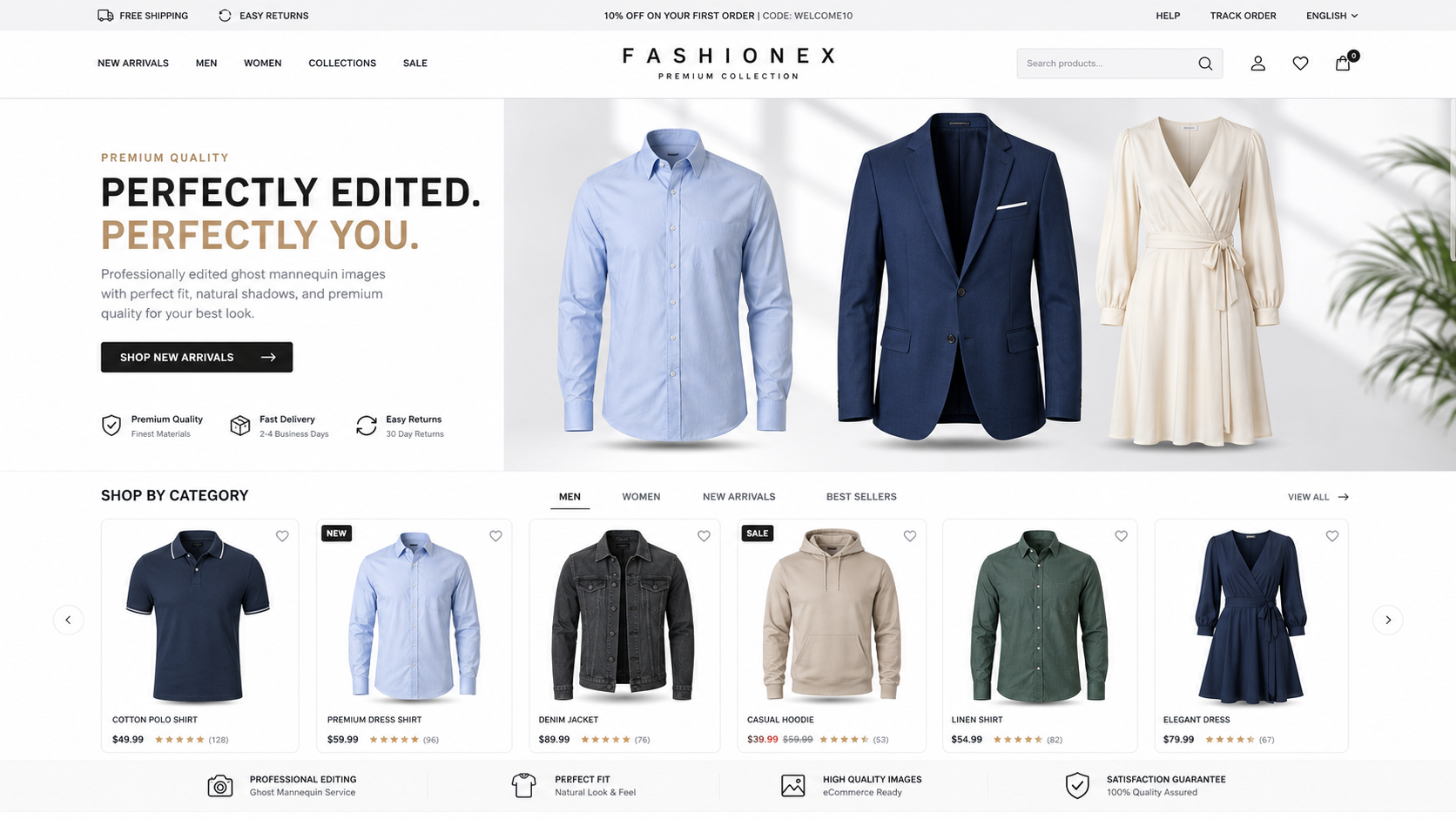
If you’re running a Shopify store or selling on Amazon, your product photos are doing the job a salesperson would do in a physical store. There’s no one there to explain the fabric or point out details — the photo has to communicate all of that instantly.
This is where an eCommerce Photo Editing Service earns its keep. Marketplaces like Amazon actually have specific image requirements around backgrounds, sizing, and presentation, and ghost mannequin images tend to meet those standards right out of the box. You can review Amazon’s own seller image guidelines through Amazon Seller Central if you want to see how strict these standards can get.
Shopify store owners have a bit more creative freedom, but the same logic applies — shoppers browsing a mobile feed make split-second decisions, and a clean, dimensional product photo stops the scroll far more effectively than a flat or awkwardly draped one. Shopify’s own blog covers a lot of this in their guidance on product photography best practices, and the recurring theme is always the same: clarity sells.
Ghost Mannequin vs Flat Lay Photography
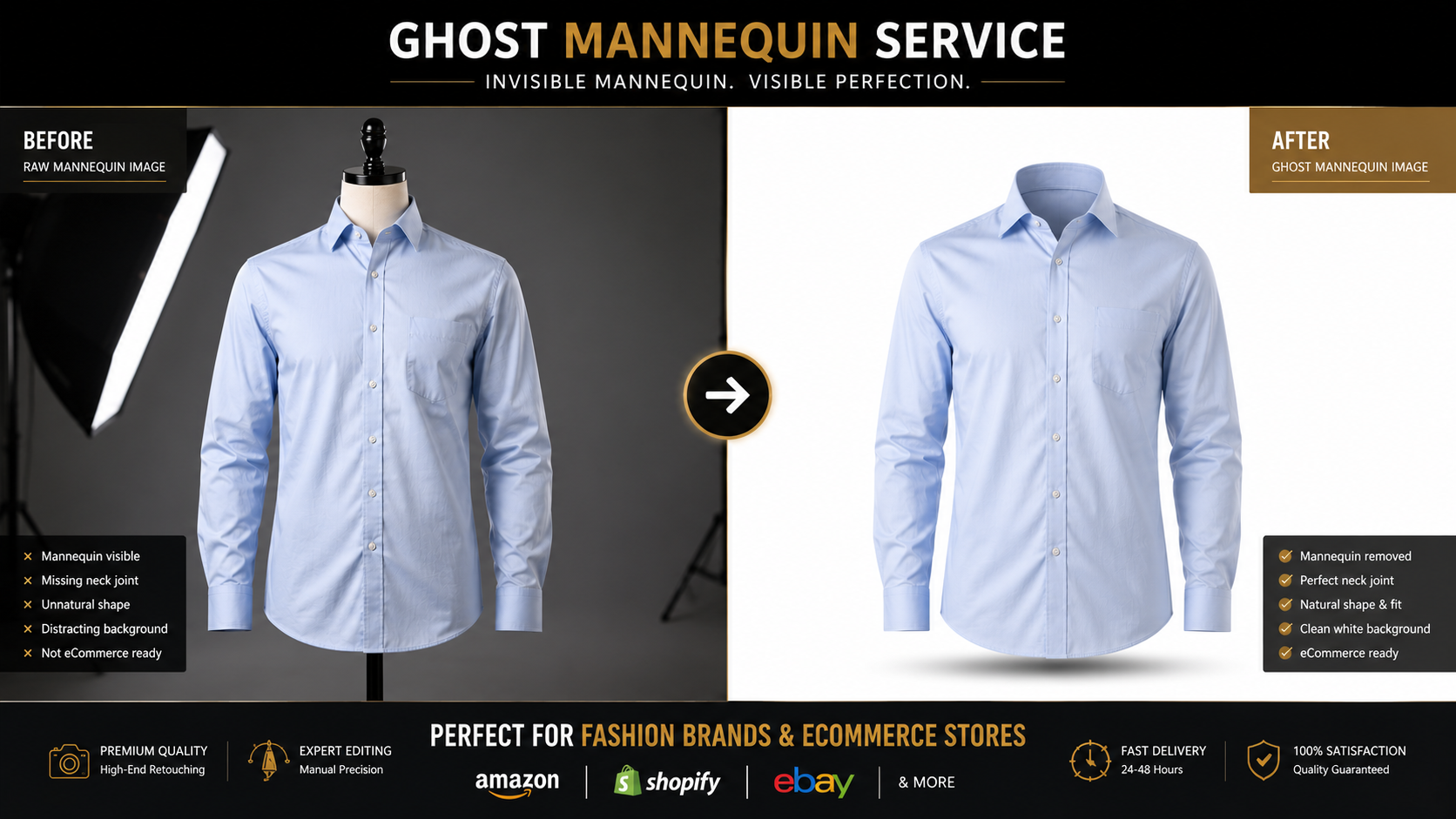
Both styles are popular in eCommerce, but they serve different purposes.
Flat lay photography involves laying the garment on a flat surface and photographing it from above. It’s fast, affordable, and great for showing texture, patterns, and layered outfits. However, it doesn’t show how the garment fits a body.
Ghost mannequin photography shows the natural shape and drape of the clothing, giving shoppers a much better sense of fit and volume.
A quick comparison:
| Factor | Ghost Mannequin | Flat Lay |
|---|---|---|
| Shows body shape/fit | Yes | No |
| Production speed | Moderate | Fast |
| Editing complexity | Higher | Lower |
| Best for | Shirts, dresses, jackets | Accessories, layered looks |
| Shopper perception | Premium, 3D | Casual, editorial |
Many brands actually use both styles side by side — flat lays for detail shots and ghost mannequin images as the primary product photo.
Ghost Mannequin vs Live Model Photography
Live model photography brings clothes to life in a different way — showing movement, styling, and real-world context. It’s fantastic for brand storytelling and lifestyle marketing.
But it comes with real costs: models, stylists, makeup artists, studio rental, and far more time per shoot. It’s also harder to keep consistent across dozens or hundreds of SKUs.
Ghost mannequin editing offers a more scalable, budget-friendly alternative for catalog-style photography, while still giving a realistic sense of shape and fit. Many brands use live model shots for hero images and marketing campaigns, then rely on Fashion Product Photo Editing with the ghost mannequin technique for the bulk of their catalog listings.
Industries That Use Ghost Mannequin Editing
While it’s most associated with apparel, the technique shows up across several industries:
- Clothing manufacturers producing catalog images for wholesale buyers.
- Fashion retailers listing seasonal collections online.
- Amazon and eBay sellers who need marketplace-compliant images.
- Shopify store owners building a cohesive brand catalog.
- Uniform and workwear companies showcasing functional garments.
- Sportswear brands displaying technical fabrics and cuts.
- Costume and formalwear rental businesses presenting structured garments like suits and gowns.
Real-World Examples
Amazon sellers: A small apparel seller launching a new line of men’s dress shirts will typically shoot each shirt on a mannequin, then send the images out for editing. The final ghost mannequin photos meet Amazon’s white-background requirements and make the listing look like it belongs next to established brands.
Shopify stores: A boutique dress shop switching from flat lay photos to ghost mannequin images often sees an immediate lift in how “premium” their store feels, simply because the dresses show real shape and volume instead of lying flat.
Fashion retailers: Mid-sized retailers refreshing their seasonal lookbook frequently mix live model shots for the homepage with ghost mannequin images for individual product pages, keeping the catalog fast to browse and easy to compare.
Clothing manufacturers: A manufacturer supplying multiple retail partners needs one consistent set of product images that any partner can use. Ghost mannequin editing provides that neutral, brand-agnostic presentation.
Common Mistakes to Avoid
Even experienced sellers run into avoidable problems with ghost mannequin editing. Here are the ones we see most often:
- Skipping the interior neck shot. Without a reference photo of the inside collar, editors are left guessing, which leads to unnatural-looking necklines.
- Inconsistent lighting between shots. If the front, back, and interior shots aren’t lit the same way, the final blend looks patchy.
- Ignoring shadow direction. Shadows that don’t match the lighting setup are one of the fastest ways to make an edit look fake.
- Over-relying on automated tools. Fully automated background removal tools struggle with the fine reconstruction work ghost mannequin editing requires — this is still very much a job for a trained editor.
- Not standardizing image size and format across the catalog. Marketplaces like Amazon are strict about this, and inconsistency can hurt your listings’ compliance and appearance.
- Choosing the cheapest option without checking quality. Apparel Retouching Service quality varies widely, and a bad edit can do more damage than no edit at all.
How to Choose the Right Service Provider
Not all editing services are created equal. When evaluating a provider for Clothing Photography Editing, look for:
- A visible portfolio of ghost mannequin work, not just generic before-and-afters.
- Turnaround time that matches your catalog size. Bulk orders need providers who can scale without sacrificing quality.
- Clear pricing per image, with no vague “custom quote only” pricing for standard requests.
- Revision policies. You want a provider who will fix issues without a fight.
- Experience with your specific garment types — a provider skilled with T-shirts may not have the same finesse with structured jackets or gowns.
- Software proficiency, particularly with tools like Adobe Photoshop, which remains the industry standard for this kind of detailed editing work.
If you’re looking for a team that specializes in this exact niche, our Ghost Mannequin Service is built specifically around apparel brands that need consistent, marketplace-ready images at scale. We also offer complementary services like clipping path editing, photo retouching, and background removal for brands that need a full-service Fashion eCommerce Images workflow.
Frequently Asked Questions
1. What is a Ghost Mannequin Service used for?
It’s used to edit apparel photos so garments appear worn by an invisible person, showing natural shape and fit without a visible mannequin or model.
2. Is Ghost Mannequin editing the same as Invisible Mannequin Service?
Yes. The two terms are used interchangeably in the industry and refer to the same editing technique.
3. How long does Ghost Mannequin Photo Editing take?
Turnaround varies by provider and order size, but a typical single-image edit takes anywhere from a few hours to a couple of days, with bulk orders taking longer.
4. Do I need special photography equipment for ghost mannequin shots?
You need a mannequin form, consistent studio lighting, and a camera capable of shooting multiple angles, including the interior neckline. A tripod helps keep shots aligned for editing.
5. Can Ghost Mannequin editing work for dresses and jackets, not just shirts?
Yes. The technique applies to almost any garment with an opening large enough to photograph the interior, including dresses, jackets, sweaters, and coats.
6. How much does Apparel Photo Editing typically cost?
Pricing is usually per image and depends on garment complexity, but most providers offer tiered pricing for bulk catalog orders.
7. Is Ghost Mannequin photography required for Amazon listings?
It’s not strictly required, but it’s widely used because it satisfies Amazon’s clean-background image standards while showing garment shape more clearly than flat lays.
8. What software is used for Ghost Mannequin Photo Editing?
Adobe Photoshop is the industry standard due to its precision layering and masking tools, though some providers use additional specialized plugins.
9. Can I combine Ghost Mannequin images with flat lay or model photos?
Absolutely. Many brands mix formats — ghost mannequin for primary catalog shots, flat lays for detail shots, and model photography for lifestyle marketing.
10. What’s the biggest difference between Ghost Mannequin and Flat Lay photography?
Ghost mannequin shows the garment’s 3D shape and fit, while flat lay shows texture and layout from directly above without conveying volume.
11. How do I choose a reliable Apparel Retouching Service?
Check their portfolio for ghost mannequin-specific work, confirm turnaround times fit your needs, and ask about revision policies before committing to bulk orders.
Final Thoughts
Product photography isn’t just a formality in eCommerce — it’s often the single biggest factor in whether a shopper trusts your brand enough to click “buy.” A professional Ghost Mannequin Service gives your apparel catalog the polish, consistency, and dimensional presentation that today’s online shoppers expect, whether you’re selling on Amazon, running a Shopify store, or supplying retailers as a manufacturer.
If your product photos still look flat, inconsistent, or amateur, that’s costing you sales right now. Visit Photo Clipping Path BD to see how our ghost mannequin editing and related photo editing services can transform your catalog into something that actually converts browsers into buyers.